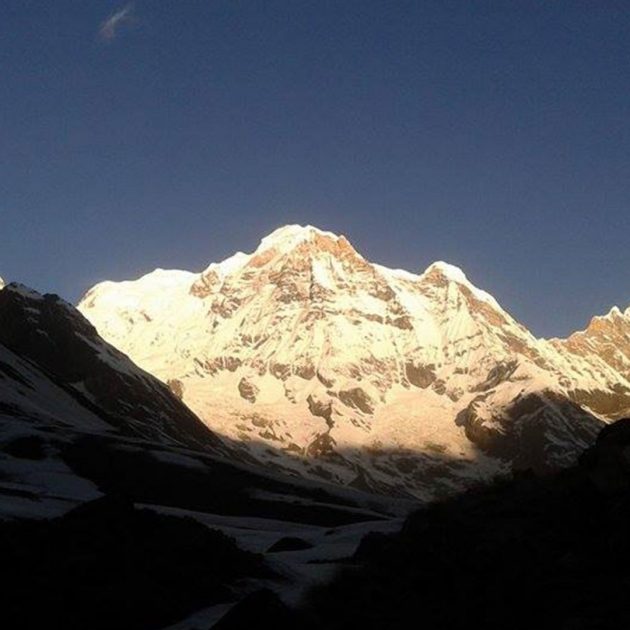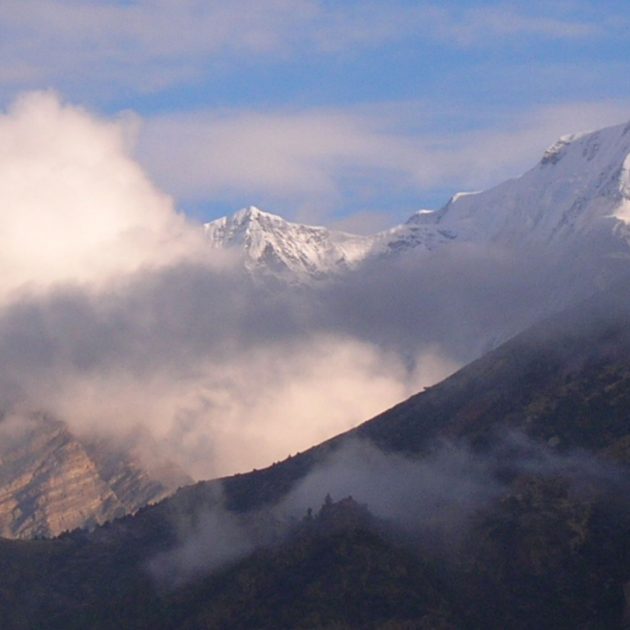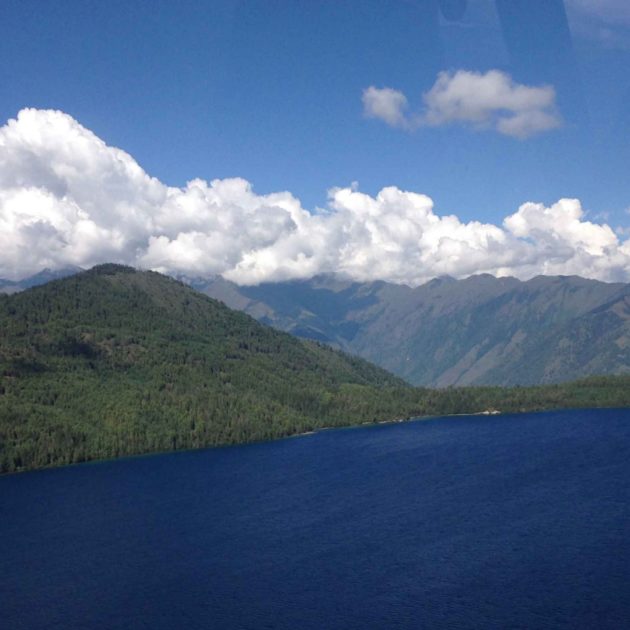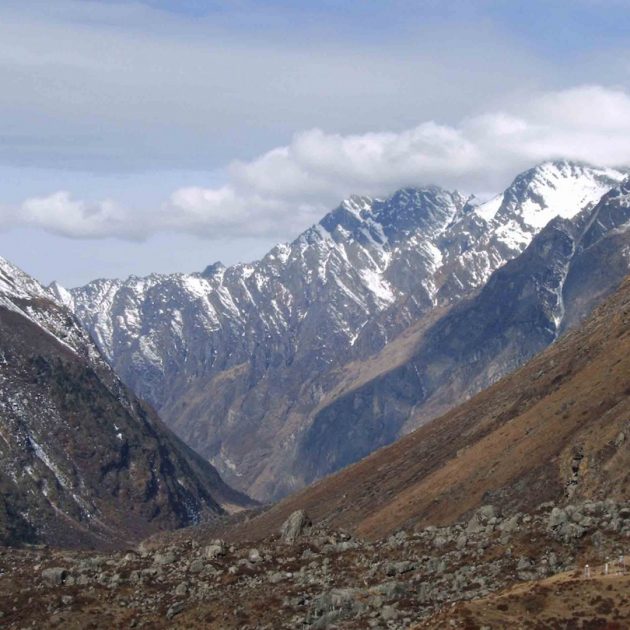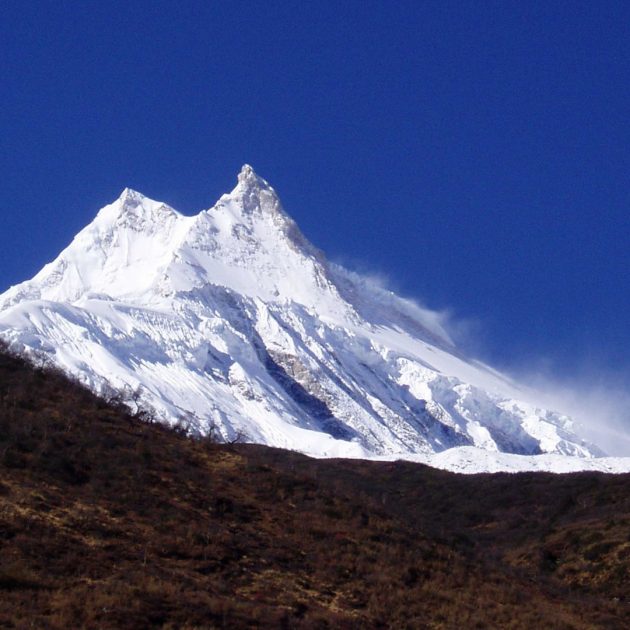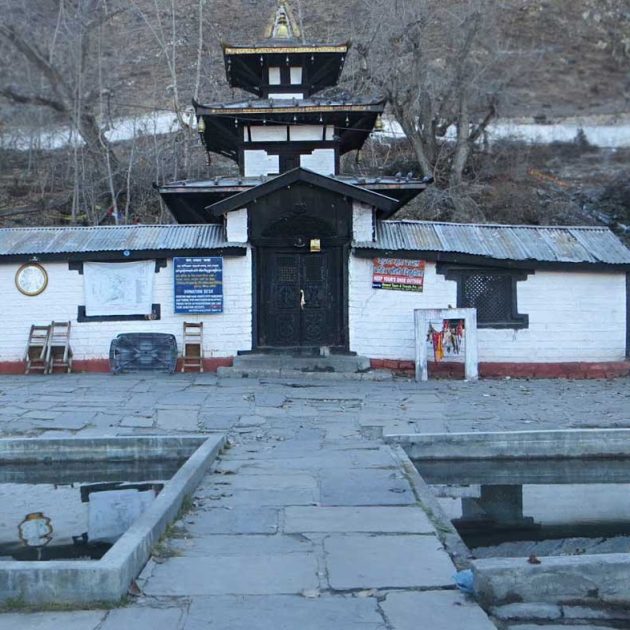
Trekking In Everest |
The name
"Everest"
is magic
in
itself.
Everest
(8848m.)
is
called "SAGARMATHA"
in
Nepali -
"Higher
than the
Sky" and
"CHHOMOLUNGMA"
in
Tibetan
-
"Mother
Goddess
of the
Earth".
The
Mount
Everest
or Solu
Khumbu
region
is one
of the
most
popular
trekking
areas in
Nepal -
tinged
with the
romance
of being
so close
to the
highest
mountain
in the
world.
The
route
lies in
the
highest
wildlife
reserve
in the
world,
the
Sagarmatha
National
Park. It
covers
an area
of 1,148
sq. km.
of
Himalayan
ecological
zone.
The park
altitudes
range
from
2,845m
at Monju
to the
top of
the
world,
UNESCO
listed
the park
as a
World
Heritage
Site in
1979 for
its
unique
natural,
cultural
and
landscape
characteristics.
A trek
in this
region
follows
the
course
of the
Dudh
Kosi,
the
'River
of
Milk',
gradually
climbing
through
forests
of
rhododendron
and
magnolia.
It takes
one to
the
foothills
of the
mightiest
of the
mountains
in the
world.
En
route,
one
traverses
through
rhododendron
and pine
forests,
rivers,
Sherpa
villages
and
Buddhist
Monasteries
from
temperate
to snow
line
regions.
The
Himalayas
are best
seen on
this
trek as
one
traces
the main
route
through
the
Khumbu
region
from the
Sherpa
town of
Namche
Bazaar.
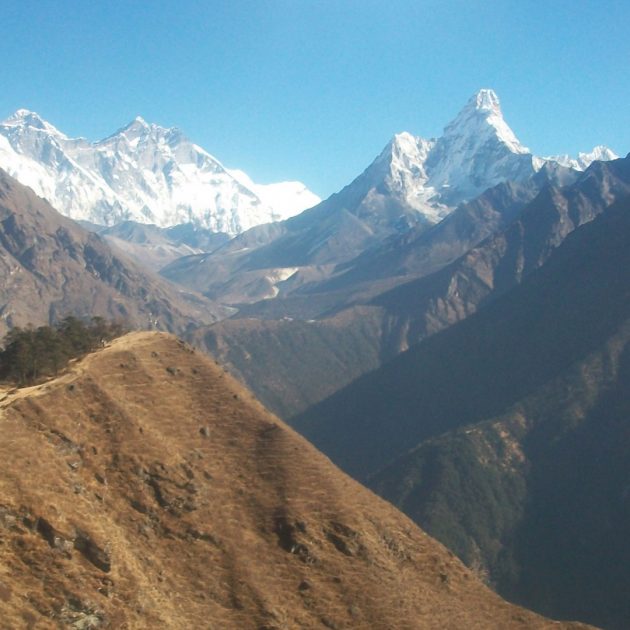
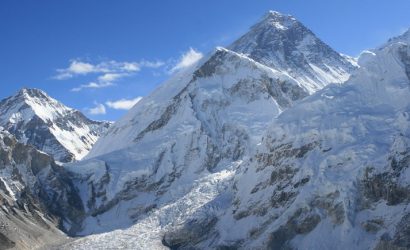
Trekkers
get a
close
view of
the
world's
greatest
mountains,
Everest,
Lhotse,
Nuptse,
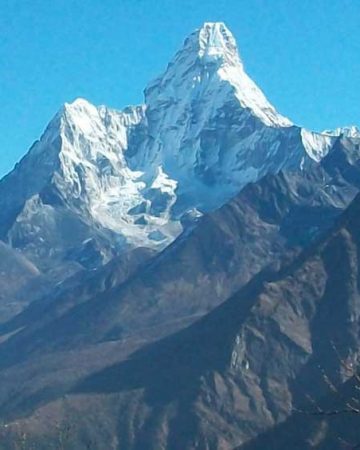
Ama
Dablam,
Thamserku,
Tawache
and many
other
unnamed
mountains
and
peaks.
For the
people
of this
exotic
region,
the hard
grind in
the
daily
life in
the high
Himalayas
is
interrupted
by
seasons
of
feasts
and
festivals,
marked
by
dancing
and
general
merry
making.
Most
festivals
are of
religious
nature
and
centre
on the
temples
and
monasteries,
with
rites
conducted
by lamas
(priests).
These
festivals
are
spread
out
through
the full
moon
days of
May,
June,
July,
August
and
November
in
different
sections
of the
Himalayas.
While
the
Sherpas
are the
most
predominant
people
of
Solukhumbu,
in the
lower
region
of Solu,
the
Khaling
Rai
culture
prevails
as well.
In
Khumbu
where
agriculture
land is
limited,
livestock
raising
and
trade is
more
important,
while
Solu
with
less
severe
winters
grows a
variety
of
staple
crops. |
| |
Major
Trekking
Routes IN EVEREST REGION |
 |
Everest
Base Camp Trek -
13 Days
The
Everest
or
Khumbu
region
is
justifiably
the most
famous
of all
trekking
and
mountain
regions.
Populated
by
Sherpas,
the
attractions
of this
area are
the
majestic
mountains,
the high
mountain
read more » |
|
| |
 |
Everest
Base Camp Trek -
14 Days
The
Everest
or
Khumbu
region
is
justifiably
the most
famous
of all
trekking
and
mountain
regions.
Populated
by
Sherpas,
the
attractions
of this
area are
the
majestic
mountains,
the high
mountain
read more » |
|
| |
 |
Everest
Adventurous Trek
With
eight of
the
world’s
ten
highest
peaks,
Nepal is
loaded
with
spectacular
mountains
vistas.
Everest
trek is
not only
famous
for its
proximity
to the
world’s
highest
mountain
(8848m.)
but also
for its
read more » |
|
| |
 |
Everest
Kalapathar Trek
With
eight of
the
world’s
ten
highest
peaks,
Nepal is
loaded
with
spectacular
mountains
vistas.
Everest
trek is
not only
famous
for its
proximity
to the
world’s
highest
mountain
(8848m.)
but also
for its
read more » |
|
| |
 |
Easy
Trek
The name
“Everest”
is magic
in
itself.
Everest
(8848m.)
is
called
“SAGARMATHA”
in
Nepali –
“Higher
than the
Sky” and
“CHHOMOLUNGMA”
in
Tibetan
–
“Mother
Goddess
of the
Earth”.
The
Mount
read more » |
|
| |
 |
EBC
Lukla Kalapathar
EBC
With
eight of
the
world's
ten
highest
peaks,
Nepal is
loaded
with
spectacular
mountains
vistas.
Everest
trek is
not only
famous
for its
proximity
to the
world's
highest
mountain
(8848m.)
but also
for its
read more » |
|
| |
 |
Everest
Cultural Trek
The
Khumbu
region
in
eastern
Nepal is
the home
of the
Sherpas,
the
world’s
most
famous
mountaineers.
The
Tengboche
Monastery,
center
of
Sherpa
Buddhist
culture,
holds
pride of
place in
read more » |
|
| |
 |
Everest
Gokyo Trek - 11
Days
This
trek
explores
the
breath-taking
Gokyo
valley
which is
located
adjacent
of the
Khumbu.
Gokyo is
a land
of high
altitude
lakes
and icy
glaciersHere,
a hike
to the
high
vantage
point of
Gokyo Ri
(5350m)
read more » |
|
| |
 |
Everest
Gokyo Trek - 14
days
This
trek
explores
the
breath-taking
Gokyo
valley
which is
located
adjacent
of the
Khumbu.
Gokyo is
a land
of high
altitude
lakes
and icy
glaciersHere,
a hike
to the
high
vantage
point of
Gokyo Ri
(5350m)
read more » |
|
| |
 |
Jiri
- Namche - Gokyo
- Jiri
Drive
from
Kathmandu
(1350m.)
to Jiri
(1905)
about
188 km
which
takes
about
eight
hours.
The
first
part of
your
journey
drives
eastwards
from
Kathmandu
passing
through
Bhaktapur,
Banepa,
Dhulikhel,
read more » |
|
| |
 |
Jiri
- EBC -
Kalapathar -
Lukla Trek
Trek
from
Jiri
(1905m.)
to
Deurali
(2705m.)
which
takes
about
five and
half
hours.
The
beginning
of your
trek is
gently
ascent
for the
first
two
hours to
Mali
Danda
(2440m.)
and then
it
follows
gently
read more » |
|
| |
 |
Jiri
- EBC -
Kalapathar -
Jiri Trek
Trek
from
Deurali
to Jiri
(1905m.)
which
takes
approximately
six
hours.
The
beginning
part of
your
trek is
steeply
descent
upto
Shivalaya
through
forests,
villages
and
terraces.
There
has
reached
read more » |
|
| |
 |
Jiri
- Gokyo - Chola
Pass -
Kalapathar - EBC
Trek
from
Gorakshep
to
Everest
Base
Camp
(5337m.)
and back
to
Gorakshep
which
takes
about 4
and half
hours.
While
trekking
to
Everest
Base
Camp you
pass
through
a trail,
which
weaves
its
read more » |
|
| |
 |
Jiri
- Gokyo - Lukla
Trek
Trek and
climb
from
Gokyo to
Gokyo Ri
[5340m]
& Trek
back to
Machhermo
(4410m.)
via
Gokyo
village
and it
takes
about
six
hours.
Gokyo Ri
looms
above
the
village
on the
northern
edge of
the lake
and
read more » |
|
| |
 |
Jiri
- Kalapathar -
EBC - Lukla
Trek
from
Chhukung
to
Chhukung
Ri
(5546m.)
to
Lobuche
(4900m.)
via
Dongla(4620m.)
and it
takes
almost
six
hours.
From
Chhukung
Ri you
can have
a view
of Mt.
Nuptse
(7896m.),
Mt.Lhotse
(8511m.)
read more » |
|
| |
 |
Lukla
- Namche - Gokyo
- Lukla
This
trek
explores
the
breath-taking
Gokyo
valley
which is
located
adjacent
of the
Khumbu.
Gokyo is
a land
of high
altitude
lakes
and icy
glaciersHere,
a hike
to the
high
vantage
point of
Gokyo Ri
(5350m)
read more » |
|
| |